

 Login
Login
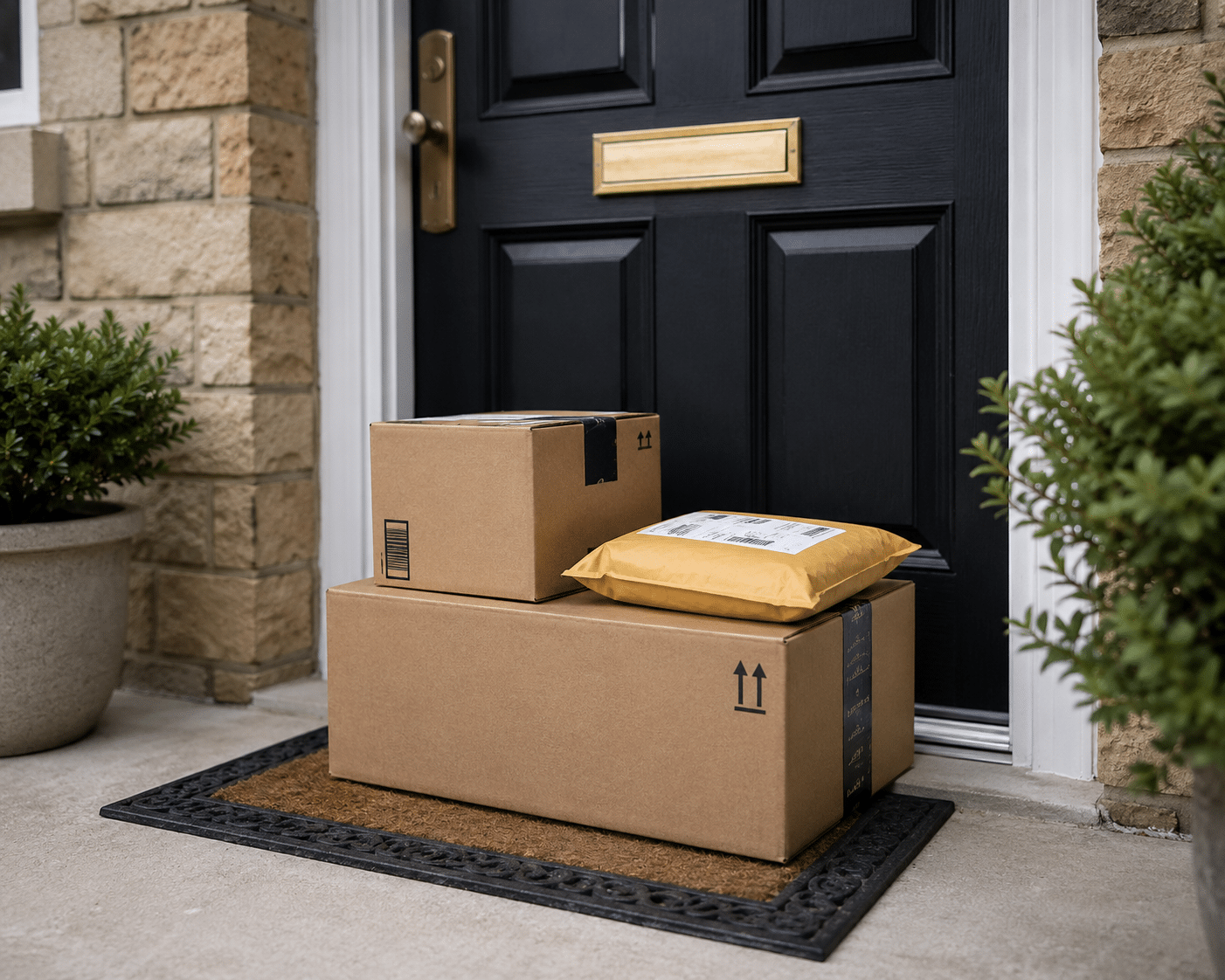
New research from Parcel Pending by Quadient has laid bare just how serious the UK’s parcel theft crisis has become, and it makes for sobering reading. But while the report makes a compelling case for parcel lockers, it’s focused on the communal, out-of-home variety. Here’s why we think the data actually points to something better: a smart parcel locker at your own front door.
The Scale of the Problem
According to Quadient’s 2025 Parcel Theft Report, a record-breaking 4.83 million UK homes fell victim to porch piracy last year, equating to one package stolen every seven seconds. Reported cases have risen 77% in a single year, and the total value of stolen parcels has hit £666.5 million, almost double the previous year’s figure. The average value of a stolen parcel has also reached a record high of £138, meaning thieves are increasingly targeting higher-value items.
This isn’t a niche problem confined to a few unlucky postcodes. One in six UK households has been affected, and no region is immune, from Greater London (27% of households hit) to Wales (21%) and the North West (19%).
It’s Not Just About the Money
What makes Quadient’s research particularly striking is the human cost it uncovers. Parcel theft isn’t just an inconvenience:
- 37% of victims reported stress and anxiety as a result, rising to 42% of women and nearly half of all over-55s
- 26% said the theft left them feeling unsafe in their own neighbourhood
- 26% said it disrupted something important, such as a birthday gift or a work deadline
- 29% suffered direct financial loss, struggling to secure refunds or replacements
- 13% have stopped shopping online altogether as a result
That last figure is particularly striking. Porch piracy is actively damaging people’s confidence in e-commerce, and the anxiety it creates doesn’t always disappear once a refund comes through.
So People Are Turning to Parcel Lockers — But Which Kind?
Quadient’s report notes that 30% of theft victims switched to using parcel lockers after losing a package, rising to 44% among 25–34-year-olds. And 64% of UK consumers say they’d feel more comfortable using a locker or collection point.
The report focuses on communal, out-of-home lockers, the kind you find at supermarkets, petrol stations, or train stations (think InPost, Amazon Locker, and similar). And yes, they’re more secure than a doorstep. But they come with their own significant drawbacks for consumers:
- You still have to make a trip. An out-of-home locker requires you to travel to collect your parcel, potentially out of your way, during limited opening windows, or carrying heavy or bulky items.
- They’re often in high-footfall public spaces, which means they can be busy, have queues, or your locker slot may already be full.
- Time limits apply. Most communal lockers require you to collect within 24–72 hours or your parcel is returned.
- They don’t solve the problem at home. If you’re ordering something for a family member, or you’re not near a locker network, you’re back to square one.
- 60% of parcel thefts happen between 9am and 5pm, precisely the hours when most people are out and unable to redirect or receive deliveries. An out-of-home locker requires another trip on top of that.
The Hidden Environmental Cost of Out-of-Home Collection
The communal locker industry often promotes its out-of-home networks as the greener choice, consolidating deliveries into fewer van stops. In theory, that sounds compelling. In practice, it overlooks a critical part of the picture: how customers actually collect their parcels.
The reality is that most people drive to a collection point. A courier delivering to a locker hub may make fewer stops, but if the customer then jumps in their car to retrieve the parcel, any carbon saving from consolidated delivery is quickly erased, and in many cases exceeded.
This isn’t just our opinion. iParcelBox worked with leading academics at the University of Hull’s Aura Innovation Centre to map the carbon footprint of different e-commerce delivery methods, resulting in a free, publicly available carbon calculator at co2.myparcel.org.uk. The research found that for a large proportion of the population, at-home delivery to a secure location is the genuinely greener option, precisely because it eliminates that additional customer journey entirely.
A successful first-time home delivery, straight into an iParcelBox, generates no extra trip, no wasted redelivery, and no customer car journey. When the Quadient report notes that every stolen parcel requiring a replacement delivery effectively doubles its carbon footprint, the case for getting it right first time, at home, becomes even clearer.
The Better Solution: A Smart Parcel Locker at Your Own Home
iParcelBox is a smart, secure parcel locker installed at your own property. All major couriers can deliver directly into it, with no trips required, no time limits, and no queues. Your parcels wait safely inside until you’re ready to retrieve them, whether that’s when you get home from work, after a weekend away, or any time that suits you.
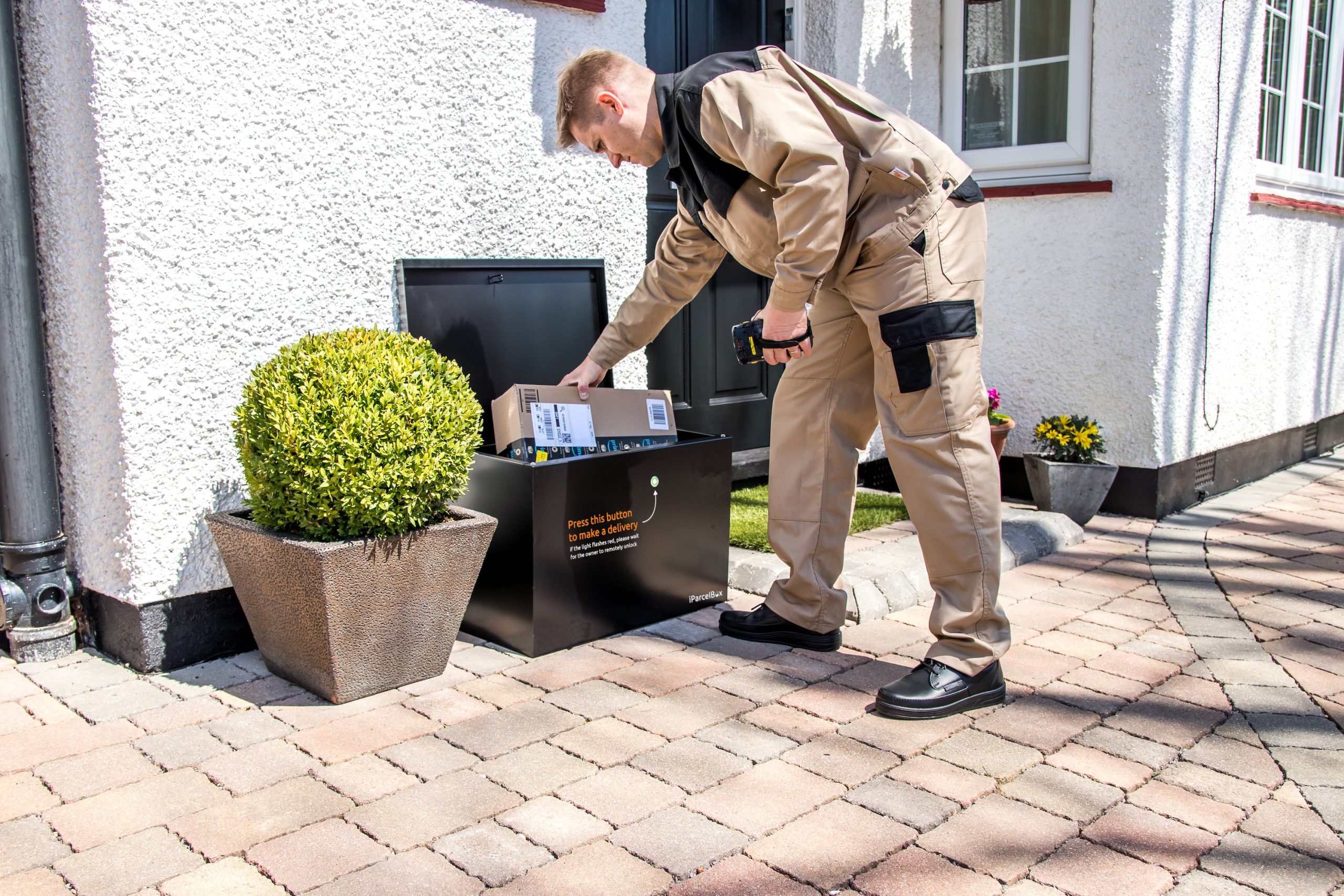
And it works the other way too. iParcelBox can be used for returns collections, so when you need to send something back, the courier can collect directly from your locker. No more waiting in for a collection, no more trips to a drop-off point.
With an iParcelBox:
- Every delivery goes securely into your locker, not left on a doorstep or redirected to a neighbour
- You get an instant notification when a parcel is delivered
- No trips to a collection point, ever
- No time pressure to collect before a deadline
- Works with all couriers and delivery companies
- Handles returns collections just as easily as incoming deliveries
- Deters opportunistic theft visibly and effectively
- Your home remains your delivery address, with no change to how you shop
- Genuinely greener than driving to a communal locker, backed by independent academic research
Given that the Quadient report found 68% of Brits would rather miss a delivery than risk it being stolen, and that 45% regularly come home to find parcels left outside, the appetite for a genuine at-home solution is clearly enormous.
The Numbers Make the Case
At £138 average value per stolen parcel, just one prevented theft can go a long way to justifying the investment in an iParcelBox. For households that shop online regularly, and nearly 40% of UK consumers shop online weekly, the question isn’t really whether you can afford a home parcel locker. It’s whether you can afford not to have one.
Communal lockers have their place. But they’re a compromise, designed for shared spaces and high-volume logistics networks, not for the individual homeowner who simply wants their deliveries to be safe, simple, and on their own terms — and who doesn’t want to undo any environmental benefit by driving to collect them.
Take Back Control of Your Deliveries
The Quadient report is a wake-up call. Parcel theft is rising, the emotional cost is real, and the status quo isn’t working. But the solution doesn’t have to mean reorganising your life around a collection point.
Find out more about iParcelBox and how it works at www.iparcelbox.com
You can also explore our carbon calculator, developed in partnership with the University of Hull, at co2.myparcel.org.ukto see how different delivery options compare on emissions.
Statistics cited in this post are drawn from the 2025 Parcel Theft Report, published by Parcel Pending by Quadient, based on Freedom of Information requests to UK police forces and a nationally representative survey of 2,000 UK adults conducted by Censuswide in September 2025. Their report is available here.